Blog
My personal goal for many years was to write about the evolution of my social activism from my youth during the heyday of the Civil Rights Movement. The duties of the pulpit rabbinate prevented me from seriously putting pen to paper, so to speak. When I wrote my first two books, I went in a different direction. They focus on specific social issues. The Ballad of East and West focused on Soviet Jewry in the early 1980s. The Secret of Redemption focused on interfaith relations and the sanctuary...
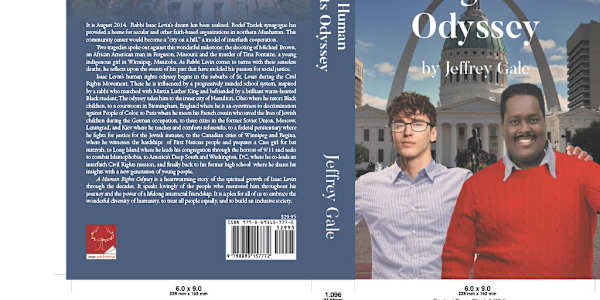
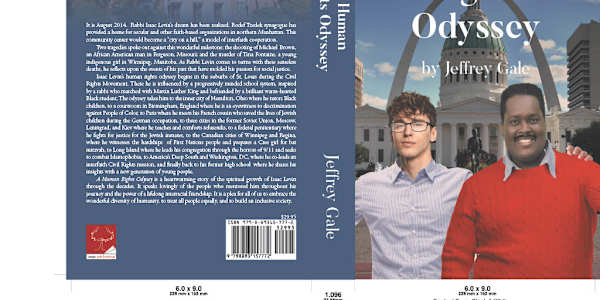
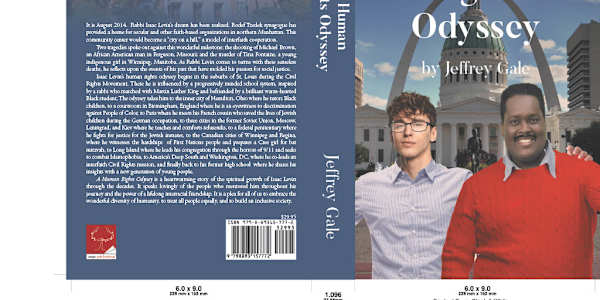
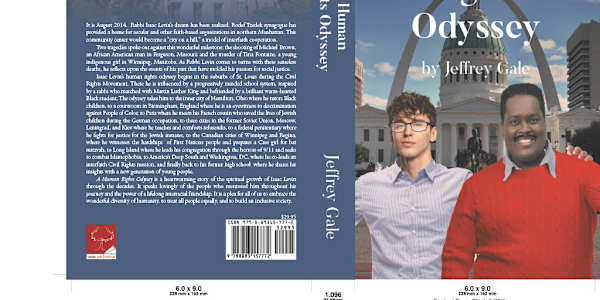
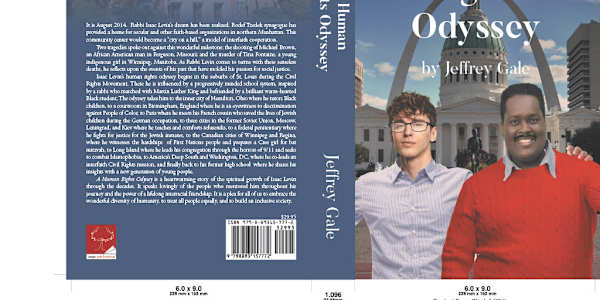
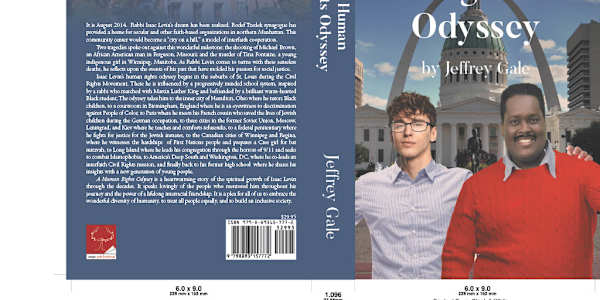
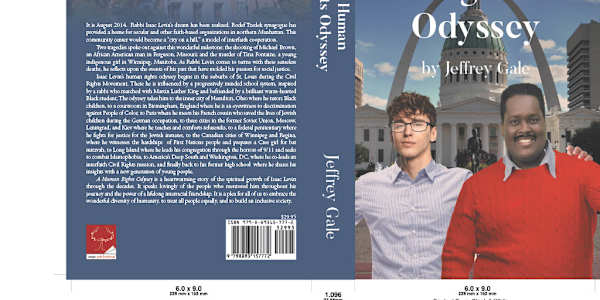
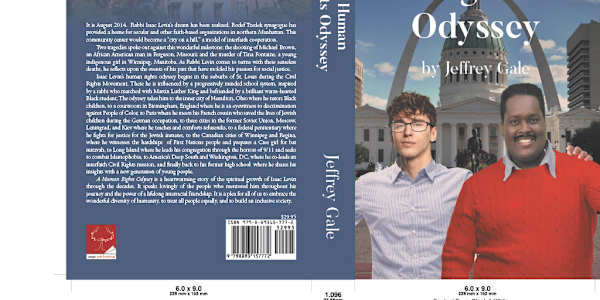
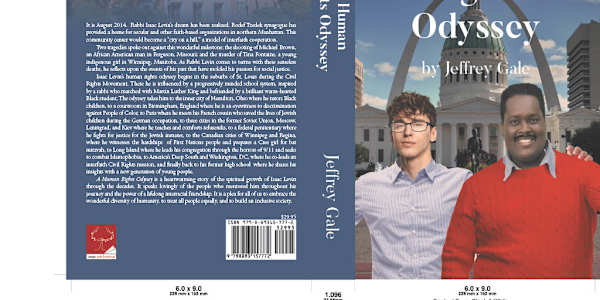
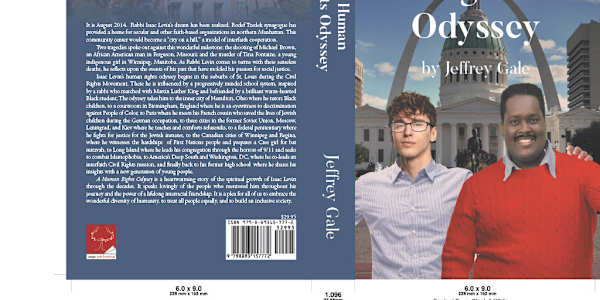
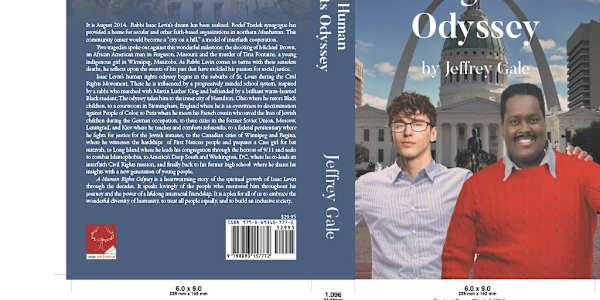
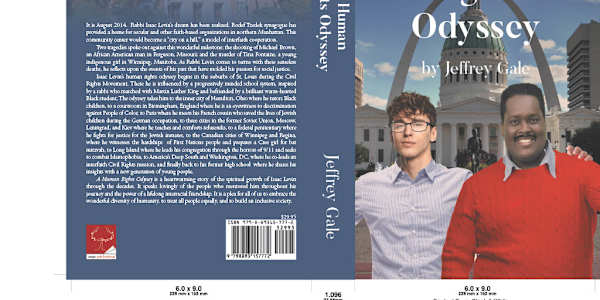
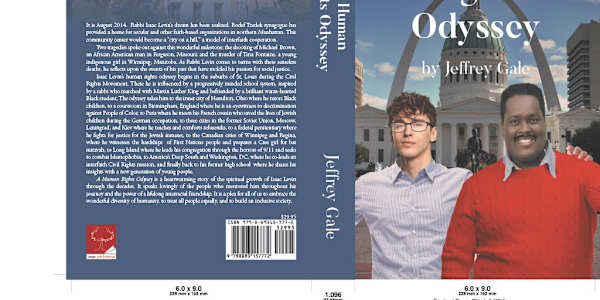
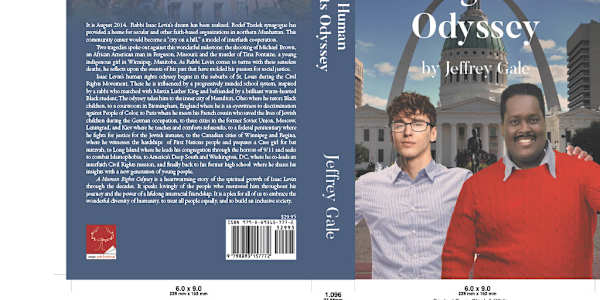
The underlying principle of my second novel, The Secret of Redemption, and of my third novel, A Human Rights Odyssey, is the rejection of the hierarchical vision of society.
In The Secret of Redemption, Rabbi Isaac Levin organizes an interfaith symposium in Cold Spring Harbor. He and his colleagues examine the systemic inequality which existed throughout American history, from the Puritans to present day oppression of immigrants and hatred of the other. Over a century ago, Cold Spring Harbor...
The ninth chapter of A Human Rights Odyssey is entitled, Whitney v. Brown. The primary story revolves around Rabbi Isaac Levin's efforts to effectively minister to his Jewish congregation at the State Prison of Southern Michigan. Unexpectedly, he supports a lawsuit which addresses violation of the civil rights of the inmates of his congregation.
One of the sections of this chapter provides a break from this most intense narrative. In the secondary story, Rabbi Levin plans and executes an...
In A Human Rights Odyssey, Rabbi Isaac Levin reacts quite strongly to the murder of Tina Fontaine. She was an aboriginal girl whose body was found in the Red River which flows through Winnipeg, Canada. One reader, to my surprise, stated that Rabbi Levin regarded her as a daughter who he never knew. It's true! When I personally reflect upon Tina Fontaine, I reflect on the many young people of this world who are doomed from birth and who never had a fair shake in life. In the novel, I compared...
In A Human Rights Odyssey, Student Rabbi Isaac Levin testifies on behalf of a congregant in a Birmingham courtroom. His congregant was unjustly accused of causing an obstruction at Birmingham High Street Station (Birmingham, England) and Levin saw everything. While sitting in traffic court and waiting to be called to testify, he witnessed people of color, often uneducated, being slapped with huge fines for relatively minor traffic violations. While Levin's congregants case was dismissed, the...
In A Human Rights Odyssey. Rabbi Isaac Levin was once a student at Miami University. While the campus grounds are immaculate and characterized by Georgian architecture, Oxford .Ohio is a launchpad towards his career as a rabbi and social activist. He begins his career by frequently leaving his Arcadian world and tutoring Black children in the inner city of nearby Hamilton.
In Evelyn Waugh's novel, Brideshead Revisited, Oxford, England is an "enclosed and enchanted garden" filled with art,...
As I mentioned in my previous blog, my allusions to diverse types of music appears throughout the novel, A Human Rights Odyssey. This is certainly true of Rabbi Levin's visit to Kiev when Ukraine was part of the Soviet Union. This visit mirrors my own visit in 1981.
When the plane landed in Kiev, the Boney M version of the song, By the Rivers of Babylon, played through the speakers. How ironic! Many of the Jews still living in Kiev and for that matter, the rest of the Soviet Union, felt as if...
In A Human Rights Odyssey, allusions to music, both classical and popular, are prominent. One important example is the hymn, Ain't Gonna Let Nobody Turn Me Around. Both the rabbi of Rabbi Levin's youth and the director of Rabbi Levin's seminary marched with Martin Luther King back in the 1960s. This song, among many, was chanted by protestors, especially during the march from Selma to Montgomery. On the steps of the state Capitol, Martin Luther King proclaimed that marchers made it despite...
On January 18, I will be reviewing my latest novel, A Human Rights Odyssey, at Temple Beth Am in Merrick, New York. The date coincides with the Martin Luther King weekend. Appropriately, Martin Luther King is a major presence in my novel, both physically and spiritually.
During the Civil Rights Period, the protagonist's childhood synagogue was the first in the St. Louis area to have Martin Luther King speak from the pulpit. Before his talk, he chilled in the Rabbi's study. The Rabbi kept the...
Although all three of my novels are classified as historical fiction, the last two differ from the first one. In The Ballad of East and West, I did not write the history of the Refusenik era into the body of the text. I falsely assumed that most people knew the history anyway. Hence, my editor persuaded me to write a brief history as an introduction to the novel.
After the publication of The Ballad of East and West, I read John Jakes' epic novel, North and South. I was deeply impressed with...
Several years ago, I purchased quite a number of DVDs of the Loretta Young Show and watched every episode with great interest. The Loretta Young Show was an icon of 1950s television. Loretta Young, who was always fashionably dressed for her time, would typically introduce each episode with an opening quote, frequently biblical, or an anecdote and would conclude each episode with clinching statement or quote. All episodes contained some type of moral message.
One critic of A Human Rights...
When I was laying the groundwork for my novel, A Human Rights Odyssey, I steeped myself in civil rights literature. One method was to watch as many documentaries as possible on Martin Luther King, Malcolm X, Rosa Parks, Harriet Tubman and others. I also read two novels from the Civil War period, North and South by John Jakes and Uncle Tom's Cabin by Harriet Beecher Stowe. John Jakes' writing gave me useful tips as to how write history into my fiction. Harriet Beecher Stowe, by graphically...
I was a huge fan of Aaron Sorkin's popular series, The West Wing, which captures the achievements and challenges of the major protagonist, President Josiah Bartlett. He is a character whom Rabbi Isaac Levin subconsciously attempts to emulate. A Human Rights Odyssey draws upon two specific episodes, Shibboleth and Twin Cathedrals.
In the ninth chapter entitled, Little Match Girl on the Prairie, I contrast the tragic life of Tina Fontaine with the more hopeful life of a Cree girl who Rabbi Levin...
The ninth chapter of A Human Rights Odyssey takes place in the Canadian cities of Winnipeg and Regina. I portray Tina Fontaine, an actual person, as the "little match girl on the prairie" to serve as a poignant symbol of innocence, abandonment, and systemic neglect.
The comparison draws on Hans Christian Andersen’s classic fairytale, The Little Match Girl,
to emphasize the following themes:
- Systemic Tragedy: By framing Fontaine through this literary lens, I highlight her status as a victim...
The musical, West Side Story, has fascinated me since childhood. When I saw it for the first time as a movie in 1961, I thought of it as primarily a story about juvenile delinquency. How wrong I was!
As a high school senior in humanities class, my classmates and I studied the text of the play and the songs in great depth. It was obviously a modernized version of Shakespeare's Romeo and Juliet and featured the bitter conflict between the Puerto Rican youths and the Polish-American youths.
From...
On October 27, l discussed my latest novel, A Human Rights Odyssey, at the University City Public Library. Much of the novel describes my growing up years in University City, Missouri during the heyday of the Civil Rights Movement. In fact, two important characters in the novel were sitting in the audience! Hence, my book discussion at the public library and my presentations at the local high school were far more personal than in my other public appearances. The novel represents the...
The centerpiece of A Human Rights Odyssey is the lifelong friendship of Isaac Levin and Jeremy Williams. The template came from Chaim Potok's masterpiece, The Chosen. In both novels, two young from different worlds come together and learn from one another. In The Chosen, Danny Saunders comes into contact with Freudian psychology which he uses as a clinical therapist. Reuben admires the religious fervor of the Hasidim and decided to become a rabbi rather than a mathematician. In A Human Rights...
In light of the political assassination of Charlie Kirk, I wish to share an excerpt from my recent novel, "A Human Rights Odyssey" in which I comment on violence in North American society.
Matthew 11:12 states: “From the days of John the Baptist until now, the kingdom of heaven suffers violence, and the violent bear it away.” In the twenty-first century, the violent must never be allowed to bear it away. Violence has never provided lasting solutions to social problems. Show me a violent...
The protagonist of The Ballad of East and West, The Secret of Redemption, and A Human Rights Odyssey is Rabbi Isaac Levin. Isaac is based on the three biblical patriarchs, Abraham, Isaac, and Jacob. Abraham and Jacob were portrayed as movers and shakers. Isaac was the weak link. Rabbi Isaac Levin, despite his involvement in human rights, saw himself not as a mover and shaker, but as a link in the chain of prophetic tradition. Levin is based on the co-protagonist of Leo Tolstoy's Anna...