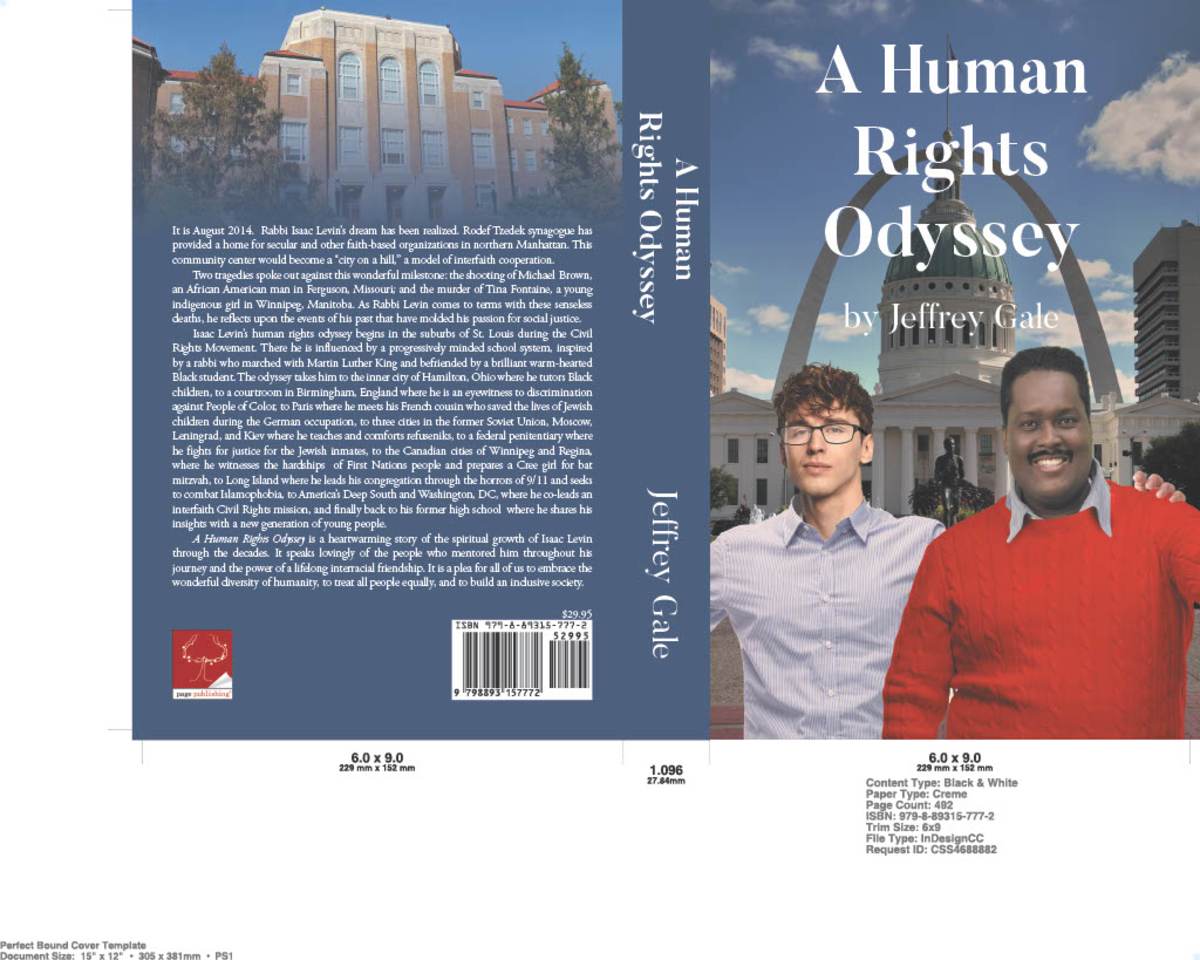
The ninth chapter of A Human Rights Odyssey is entitled, Whitney v. Brown. The primary story revolves around Rabbi Isaac Levin's efforts to effectively minister to his Jewish congregation at the State Prison of Southern Michigan. Unexpectedly, he supports a lawsuit which addresses violation of the civil rights of the inmates of his congregation.
One of the sections of this chapter provides a break from this most intense narrative. In the secondary story, Rabbi Levin plans and executes an interfaith Thanksgiving program in the wider Jackson community. Rabbi Levin's progressive values are beginning to blossom as he realizes that he is operating in a relatively conservative community. He strives to break the old boys' network and make the program more inclusive. He invites both congregations and clergy people who had been excluded in the past and invites the one female pastor to become the keynote speaker. As a result, his synagogue is packed beyond capacity when the Thanksgiving program takes place. Afterwards, a congregant rightly inquires as to the absence of African American congregants and clergy. Rabbi Levin responds that he made many efforts to contact the one Black minister that he knew. He later discovered that the Black pastors arranged a separate Thanksgiving program. Rabbi Levin was deeply upset and swore that if he organized future interfaith Thanksgiving programs, he would not allow history to repeat itself under his watch.
The primary and secondary stories complement each other. Discrimination against Rabbi Levin's Jewish inmates in the prison is mirrored by the systemic exclusion of Black clergy in community programs and the non-existence of cooperation between white, mainly Protestant clergy, and the African American community. The prison represented the microcosm of the greater society. The greater Jackson, Michigan community was the macrocosm whose values were reflected in the penitentiary where Rabbi Levin served.