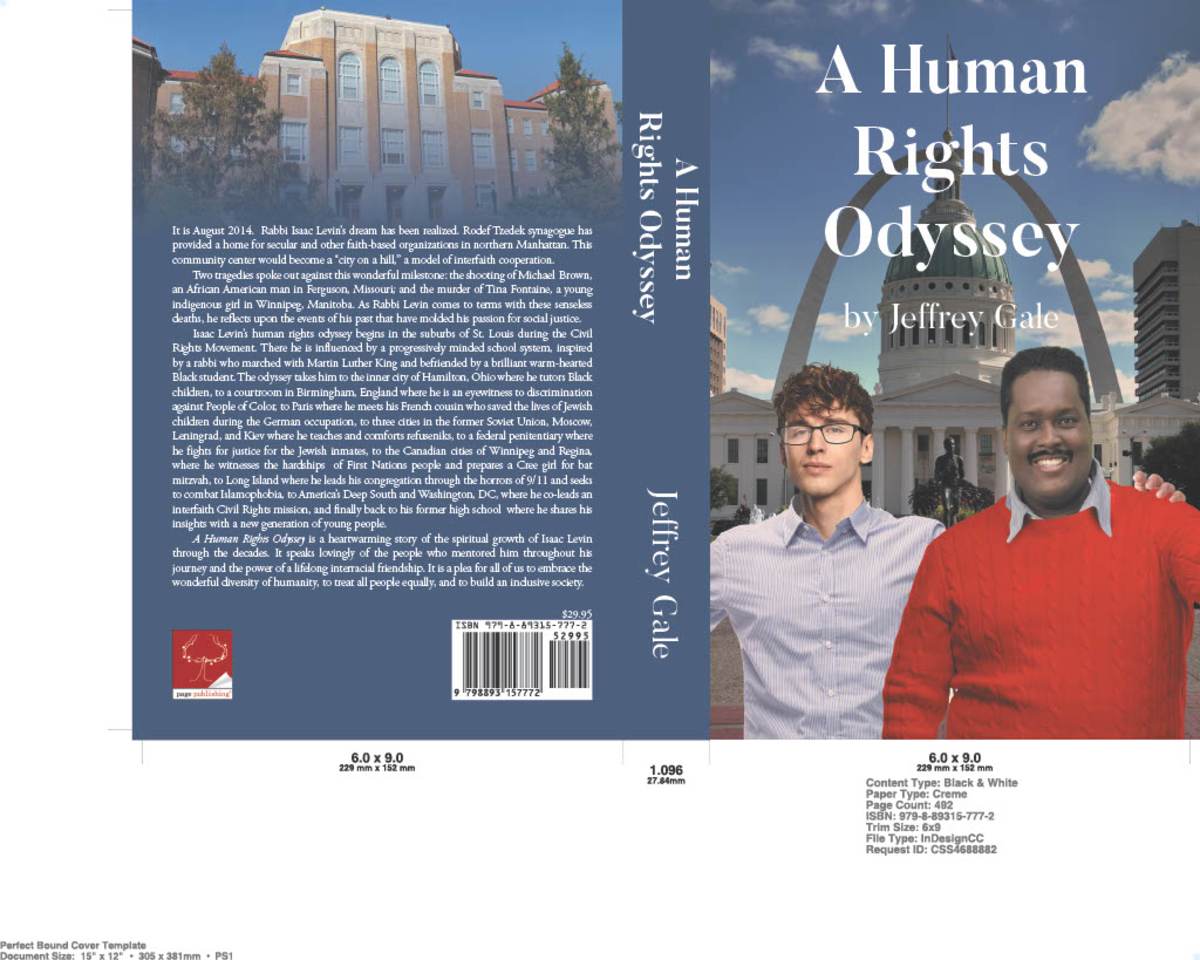
On January 18, I will be reviewing my latest novel, A Human Rights Odyssey, at Temple Beth Am in Merrick, New York. The date coincides with the Martin Luther King weekend. Appropriately, Martin Luther King is a major presence in my novel, both physically and spiritually.
During the Civil Rights Period, the protagonist's childhood synagogue was the first in the St. Louis area to have Martin Luther King speak from the pulpit. Before his talk, he chilled in the Rabbi's study. The Rabbi kept the chair until his retirement.
Later, as a seasoned rabbi, Rabbi Levin co-lead a diverse group of teenagers on a mission to the Deep South and Washington .D.C. There the group visited MLK's home in Atlanta, the church where he and his father preached, and his tombstone. When the group arrived in Montgomery, Alabama, the Black minister who also co lead the mission steeped on the foot of the Capitol building and proclaimed, "We pulled this mission off despite the concerns of many of our congregants. There ain't nobody who will turn us around." She echoed both the words of Martin Luther King after the famous march from Selma to Montgomery and the lines from a well-known Civil Rights song.
In Washington, D.C., the leaders of the mission visited the grave of JFK and held a vigil at the Lincoln Memorial where MLK delivered his famous, "I have a Dream" speech. As the group formed a friendship circle and sang "My Country Tis of Thee" and "Love Can Build a Bridge," they fully recognized that Abraham, Martin and John was an invisible presence.
In the final chapter of the novel, Rabbi Levin, echoed the same words when he addressed a large interfaith group at the interfaith Thanksgiving program in his synagogue. He said: "We pulled this interfaith event despite all challenges and reservations from some of our congregants. There ain't nobody who will turn us around. We will keep on praying. We will keep on singing. And we will build our own Promised Land.
A thought for Martin Luther King Day.